


MathTango: Math Games for Kids
4.544.00 Reviews
App Specs
- Version
- 1.3
- Updated On
- License
- Free
- Downloads
- 100,000+
- Developer
- Play Piknik
- Categories
- Educational
- Platform
- Android
Screenshots
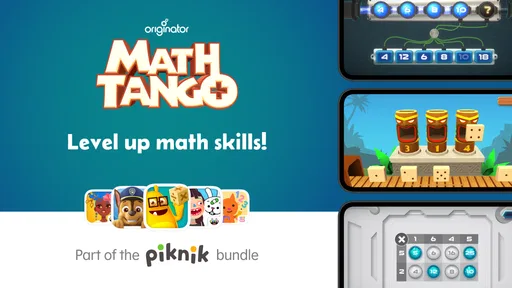
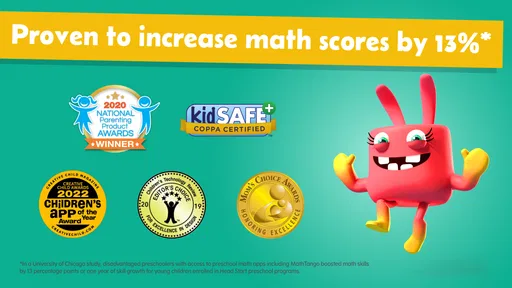
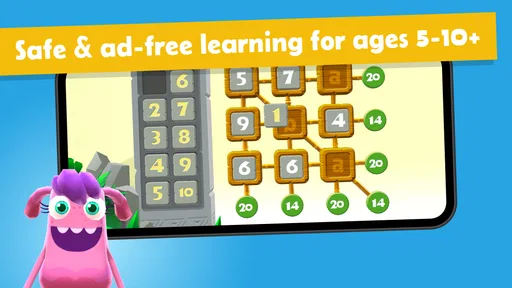
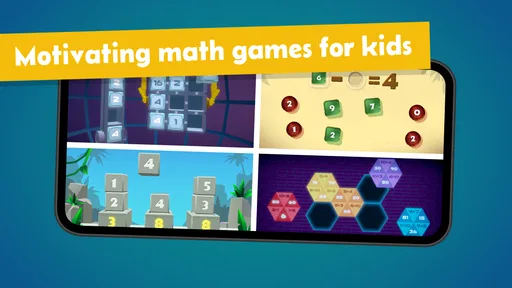
 Analysis by AppCompare
I judge children’s learning games less by how exciting the first session feels than by whether they still have a useful place in the routine a few weeks later. MathTango: Math Games for Kids makes a lively first impression: it wraps math practice in playful missions instead of presenting a child with a bare page of sums. That can make it easier to get a reluctant learner started. The longer-term question is whether the game remains a helpful prompt to practise, rather than becoming another bright app that gets opened for a few days and then forgotten.
Who is likely to get the most from it
This is an educational game from Play Piknik, aimed at children from kindergarten through grade five. I’d consider it for a child who already has some familiarity with numbers but needs a more inviting way to revisit skills such as addition, subtraction, multiplication, and division. Its game framing may also suit a child who resists worksheets but is happy to spend a short stretch solving problems as part of a playful task.
It is less compelling as a replacement for a teacher, a parent’s explanation, or focused help with a specific misunderstanding. If a child is repeatedly getting the same kind of problem wrong, an adult may need to ask what part is confusing and explain it in a different way. A game can make practice more approachable, but I would treat it as a companion to learning, not proof that a topic has been mastered.
A small routine works better than a long session
For everyday use, I’d attach the game to a predictable moment rather than leave it as an open-ended screen-time option. A quick session after homework, for example, can provide a change of pace while keeping math in the day. The practical benefit is not that every child will want to play daily; it is that a short, familiar routine is easier to sustain than waiting for a burst of enthusiasm and then asking for a long session.
Parents can make that routine more useful by checking what the child found easy or frustrating afterward. Ask them to explain one answer in their own words, or notice whether they rush through a familiar type of task. That simple conversation helps distinguish genuine confidence from tapping quickly to move on. It also turns the game into a starting point for real-world number practice, rather than leaving the learning inside the screen.
Getting Acquainted with MathTango
First things first, MathTango is available on both Android and iOS, making it super accessible no matter what device you have. The app is designed for kids aged 5 to 10, aiming to make math fun through a mix of engaging games and activities.
Fun Meets Learning
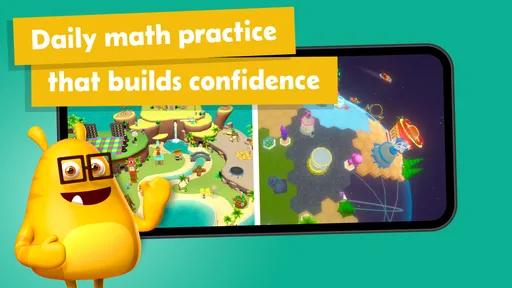
The app cleverly combines math problems with adventures, creating a seamless blend of learning and play. Kids get to embark on missions and solve puzzles that require them to use math skills. This approach keeps the experience fresh and exciting, as opposed to the usual drill-and-practice method.
Worth Reading Before You Choose

EA SPORTS FC Mobile 26 Is a Bigger Football Game, but It Takes Time

Flipboard Shows What News Apps Must Do Beyond the Feed

Switching to Android Auto Means Rethinking Your Driving Routine

Google Calendar Makes a Crowded Week Easier to Manage

Ludo King Makes the Most of the Minutes Between Plans

Baby Panda World Brings Quick Play to Modern Phones, but Its Game Library Feels Busy
What really stood out to me is how MathTango integrates math into its stories. Whether it's helping a character find hidden treasures or solving puzzles to advance to the next level, the app makes math an integral part of the gameplay, rather than an afterthought.
User-Friendly Interface
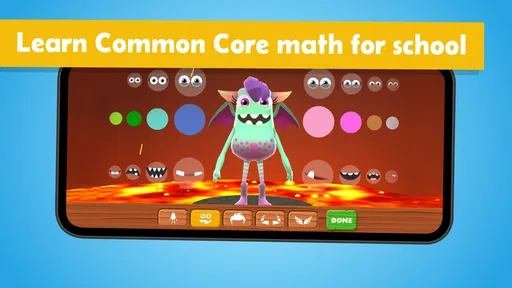
Let’s talk about the interface for a moment. The developers have done an excellent job creating a user-friendly environment that kids can navigate with ease. The graphics are vibrant and appealing, which is crucial for keeping young users engaged. It’s colorful enough to attract kids but not so over-the-top that it becomes distracting.
From the main menu to the in-game graphics, everything is intuitively laid out. This means less time figuring out how to play and more time actually enjoying the game.
Variety of Math Skills
Now, on to the core of the app: the math skills. MathTango covers a wide range of topics including addition, subtraction, multiplication, and division. What’s great is that the app adjusts the difficulty based on the child’s progress. So, if your kid is zipping through addition, they can quickly move on to more challenging content.
It also includes some nifty features like daily challenges and rewards, which not only motivate kids to keep playing but also reinforce what they’ve learned previously.
Parents, Rejoice!
For parents, the app offers a dashboard where you can track your child's progress. This feature is incredibly useful for understanding what areas your kid excels in and where they might need a little extra help. Plus, you get to see just how much time they’re spending learning, which is always a nice bonus.
Additionally, there are no annoying ads popping up, and the in-app purchases are not intrusive, which is a huge relief.
A Few Considerations
Though I’m a big fan of MathTango, it’s worth noting that while the app offers a lot for free, some of the more advanced features require a subscription. It’s something to consider if you’re planning on using it long-term. However, the cost seems reasonable given the quality of content and the educational value it provides.
What the free start can and cannot tell you
The game is free to download, but that should not be confused with every part of the experience being free. In-app purchases range from $7.99 to $79.99 per item, so I’d let a child try the available experience before deciding whether it deserves a place in the household budget. Check the purchase screen carefully and keep buying decisions with an adult; a child’s enthusiasm for a new game is not a reliable guide to whether an upgrade will be worthwhile over time.
That trial period is useful for judging fit, not just entertainment. Watch whether the child understands what to do without repeated help, whether the math itself seems appropriately challenging, and whether they return to the activity after the novelty of the characters wears off. If the game is too easy, too hard, or simply not to their taste, paying for more content is unlikely to solve the underlying mismatch.
How it fits beside other ways to practise
Compared with a standard worksheet or flash-card app, the adventure framing gives MathTango a clearer reason for a child to keep moving from one problem to the next. That is its strongest practical distinction: it can lower the initial resistance to practice. The trade-off is that children who want direct, quiet repetition may prefer a simpler drill tool, where there is less story and less visual activity between questions.
It also differs from an open-ended educational video. Watching an explanation can help introduce an idea, but it does not ask a child to work through answers in the same way. I’d use a video or adult demonstration when a concept is new or confusing, then use the game as a more playful way to revisit it. For a child needing individual instruction or a carefully sequenced school curriculum, a structured lesson or teacher’s guidance remains the better choice.
Keeping the game useful after the first week
Novelty can do a lot of work during the first few sessions. To find out whether the game has staying power, I’d look for a modest sign of progress: does the child begin a problem with less hesitation, explain an answer more clearly, or accept a short practice session without bargaining? Those are more meaningful signs of value than simply asking how long they played.
A helpful approach is to let the child choose when to fit a brief session into an existing routine, while the adult keeps the boundaries clear. For instance, after schoolwork and before another activity, a child could play for a short while and then describe one problem they solved. This keeps the game from becoming an unlimited reward and gives parents a simple way to hear whether the math is making sense.
It is also worth varying the follow-up. If a child is working on addition in the game, invite them to add up a few household objects or compare small quantities during an ordinary task. That does not require turning every moment into a lesson; it simply checks whether the child can carry a skill beyond the game’s prompts. If they cannot, pause and work through the idea together rather than assuming more play alone will fix it.
Where the routine can lose its appeal
The same features that make a game inviting can eventually feel repetitive, particularly for a child who wants new kinds of play rather than another math session. Daily challenges and rewards can encourage return visits, but I would not make a streak or reward the main reason to practise. If motivation depends entirely on the next prize, the habit may fade as soon as that incentive stops feeling new.
There is another possible friction point: a child may enjoy the adventure but pay more attention to advancing than to thinking through each answer. Sitting nearby for a session or two can show whether they are reading the tasks and working them out, or simply rushing. If speed becomes the focus, slow the session down and ask for an explanation. If that turns every play session into a struggle, a paper activity or a calmer practice format may suit that child better.
Practical checks before settling in
The game is rated for Everyone, and its educational focus makes it a natural option for younger learners, but I would still choose activities with the individual child in mind. A broad age range does not mean every child will be at the same level or enjoy the same style. The game’s listed minimum operating system is Android 5.1, so it is worth checking the device before planning to use it; the current version is 1.3.
MathTango has an average rating of 4.3 from 530 ratings, with 100K+ installs. I take those figures as a useful sign that families have tried it, not as a promise that it will suit a particular learner. It was released on Apr 9, 2024, and the sensible test is still the child’s response: do they engage with the math, and does the app make practice easier to start?
Final Thoughts
All in all, MathTango: Math Games for Kids is a fantastic app that makes learning math fun and engaging. With its adventurous approach and comprehensive content, it’s a great tool for any child looking to improve their math skills. If you’re looking for an app that will keep your kids entertained while they learn, MathTango is definitely worth checking out.
So go ahead, give it a whirl and watch your child’s math skills soar!
My longer-term recommendation
For me, the best reason to try this game is that it offers a more inviting route into arithmetic practice than a plain set of questions. It is especially promising for a child who likes missions and benefits from a parent occasionally checking in. I would skip it, or keep it as an occasional extra, if the child needs detailed explanations, strongly prefers uncluttered drills, or is already practising happily with a method that works.
The app is free to start, but its in-app purchases mean I would make the decision to spend only after seeing repeated, useful engagement rather than one excited first session. If the child returns willingly, tackles the math rather than only chasing progression, and can talk about what they solved, it may earn a regular spot. If not, there is no need to force a habit around it: another practice style may be a better fit.
Pros
- Engaging math-themed adventure gameplay.
- Wide range of math topics covered.
- Adaptive difficulty for personalized learning.
- Vibrant graphics keep kids interested.
- Rewards and progress tracking motivate users.
Cons
- In-app purchases can add up.
- Requires a stable internet connection.
- Limited content in free version.
- May not appeal to older kids.
- Occasional bugs in UI navigation.
FAQs for MathTango: Math Games for Kids
What age group is MathTango suitable for?
MathTango is designed for children aged 5-10 years old. The app provides engaging math games that cater to different learning levels, ensuring that younger children can practice basic arithmetic while older kids can tackle more complex problems. The app adapts to the user’s skill level, making it versatile for a wide age range.
Does MathTango require an internet connection to function?
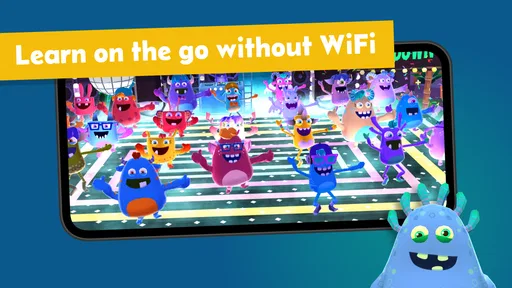
MathTango primarily functions offline, allowing children to play and learn without needing an internet connection. However, certain features may require online access, such as updates or additional content downloads. It's always a good idea to check for updates when connected to Wi-Fi to enhance the app's functionality.
Are there any in-app purchases or advertisements in MathTango?
MathTango offers a premium experience with no advertisements to distract young learners. While the app may have in-app purchases for additional content or features, these are optional and meant to expand the learning experience. Parents can control these settings to ensure a safe environment for their children.
Is MathTango compatible with both Android and iOS devices?
Yes, MathTango is available on both Android and iOS platforms. The app is optimized for a wide range of devices, ensuring smooth performance whether you're using a smartphone or a tablet. It’s advisable to check the app store for specific device compatibility and the latest version updates.
How does MathTango enhance learning beyond traditional math exercises?
MathTango uses a unique blend of storytelling and interactive gameplay to make math learning enjoyable and effective. The app incorporates puzzles, challenges, and creative problem-solving tasks that encourage critical thinking and engagement. This approach helps children develop a deeper understanding of mathematical concepts beyond rote memorization.


